
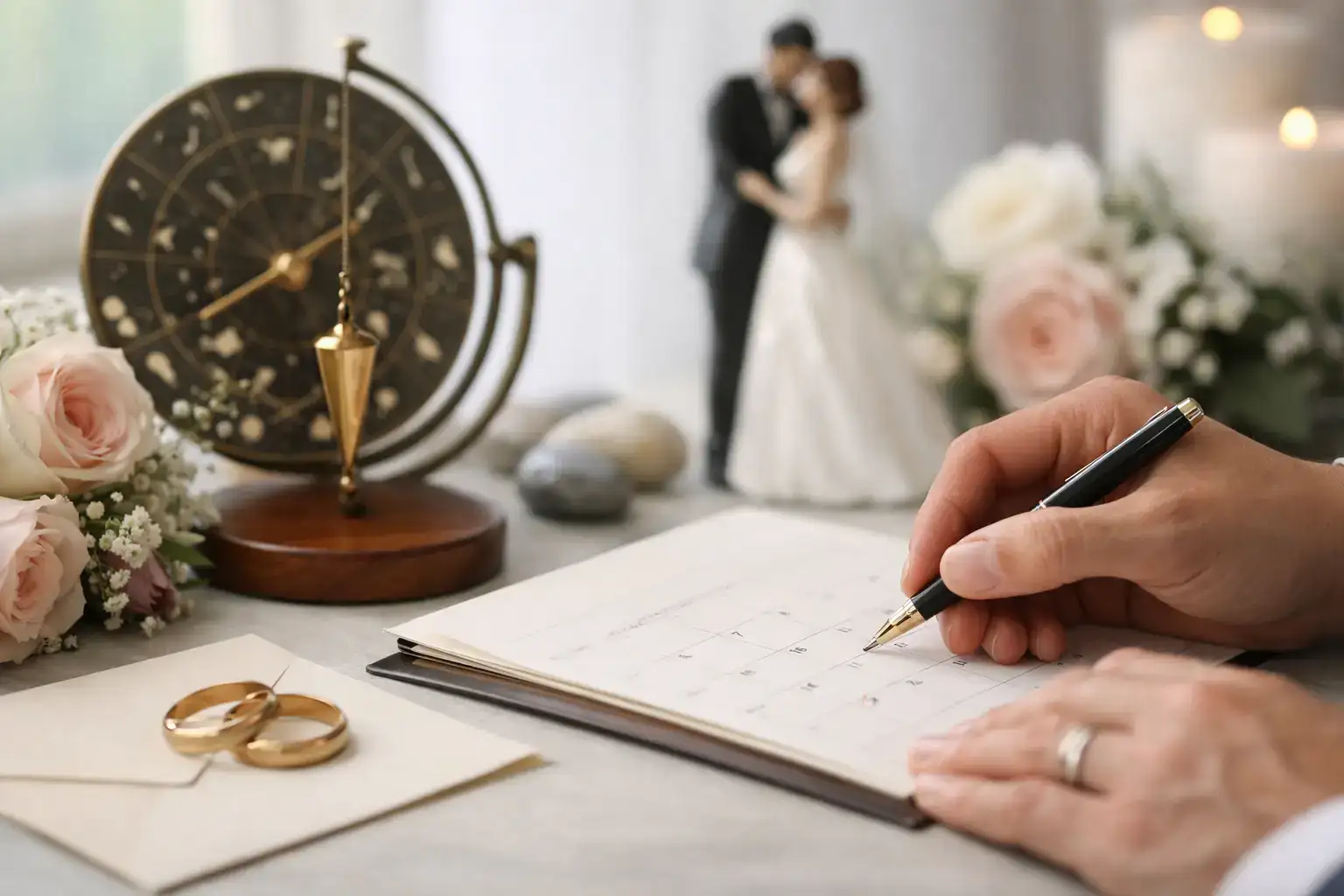
A wedding date can shape more than the invitation card. For families who take timing seriously, auspicious wedding date selection is not about chasing a lucky number or picking a public holiday. It is a strategic decision that considers the couple’s personal charts, the energy of the year, and the practical realities surrounding the marriage.
That distinction matters. Many people have been told to choose a date based on a generic almanac, zodiac animal, or a date that simply “looks lucky.” Classical date selection does not work that way. A wedding marks the formal beginning of a household and a new family unit. The timing should support that transition, not create avoidable clashes from the start.
What auspicious wedding date selection really means
In classical Chinese metaphysics, date selection is a specialized discipline. It is not fortune-cookie advice, and it is not driven by decorative beliefs or commercial superstition. The purpose is to identify a date and time that are supportive for the specific couple involved.
That means the selection process is personalized. The practitioner studies the bride and groom’s birth data, identifies key clashes and supports, and then measures possible dates against the larger time cycle. In some cases, family considerations also matter, especially when parental concerns, ancestral traditions, or cultural obligations are part of the wedding process.
A good date does not guarantee a perfect marriage. That would be an irresponsible claim. What it can do is reduce unnecessary conflict in timing, support harmony at the start of married life, and help the event itself unfold under more favorable conditions. For clients making major life decisions, that kind of edge is worth taking seriously.
Why generic “lucky wedding dates” often fall short
A date that is favorable for one couple may be unsuitable for another. This is where many online date lists become misleading. They are broad, impersonal, and often stripped of the technical checks that matter most.
For example, a date may look attractive because it falls on a popular auspicious day in the calendar. But if it directly clashes with one partner’s chart, or if it weakens the couple’s marital element balance, it may not be the best choice. The same applies to dates selected purely for convenience, venue availability, or numerology preferences.
Convenience is not irrelevant. Real life matters. Guests need notice, venues get booked, and family schedules can be difficult. But practical convenience should be balanced with proper technical selection, not replace it.
Auspicious wedding date selection is about fit, not hype
The strongest date is usually not the one with the most market appeal. It is the one that fits the couple’s configuration and avoids major technical issues. Sometimes that means choosing a quieter month, a less trendy day, or a narrower time window for the ceremony itself.
This is also why serious practitioners rarely promise a single “best date” in the dramatic sense. In practice, there may be several good options, each with different strengths. One date may be better for family harmony. Another may better support the couple’s long-term partnership. Another may work better because it avoids significant clashes while still fitting venue and travel realities.
What is considered in a proper wedding date selection
A disciplined selection process usually starts with the birth details of both partners. Their Bazi charts reveal whether certain dates strengthen or challenge the partnership dynamic. A practitioner then filters the calendar to remove dates with obvious clashes, year breakers, and unsuitable structures.
After that, the process becomes more refined. The year, month, day, and sometimes hour are evaluated together. This is important because a day that looks acceptable on its own may become weaker once the surrounding time structure is considered. In some cases, the ceremony hour matters almost as much as the date.
Family context can also play a role. If the wedding is closely tied to parental expectations, family businesses, relocation plans, pregnancy timing, or moving into a new home, these considerations may influence the final recommendation. Life events rarely happen in isolation, and good advisory work reflects that.
The role of the ceremony time
Many couples focus only on the calendar date, then overlook the ceremony hour. That can be a mistake. In classical timing work, the hour can refine or weaken the quality of the event.
If the solemnization, tea ceremony, or key formal moment takes place at an unfavorable time, the strength of the selected date can be diluted. On the other hand, a well-chosen hour can improve an already suitable day. This is especially relevant when the couple has limited date choices and needs to optimize within those constraints.
Trade-offs couples should understand
Not every ideal date is usable in the real world. The wedding industry runs on demand, and high-demand dates often create cost, scheduling, and logistical pressure. A technically suitable date that is impossible to secure may create more stress than benefit.
This is why practical date selection matters. A good consultant does not ignore your venue deposit, travel logistics, or family commitments. The goal is not to hand over a date that works only in theory. The goal is to identify a favorable option that can realistically be executed well.
There is also a difference between selecting for the legal registration, the ceremony, and the banquet. Some couples separate these events across different dates. Whether that is advisable depends on the charts and the importance assigned to each milestone. Sometimes the formal registration date should carry the strongest support. In other situations, the public ceremony may deserve greater weight.
Common mistakes in auspicious wedding date selection
One common mistake is using only the Chinese zodiac animal to decide suitability. A zodiac sign alone is too broad. It cannot replace proper chart analysis.
Another mistake is selecting dates based only on repeating digits such as 8/8 or 10/10. These dates may feel symbolically attractive, but symbolism is not the same as technical suitability. Popularity can also create rushed scheduling, vendor fatigue, and inflated pricing.
A third mistake is consulting too many sources and combining methods without understanding them. One relative checks a tong shu, another friend recommends numerology, an online calculator gives a different answer, and suddenly the couple is more confused than before. Mixed systems often produce mixed advice. If the decision matters, clarity matters too.
When should couples start?
Earlier is better, especially if the couple wants both strong dates and venue flexibility. Ideally, the selection should begin before deposits are paid. Once money is committed, the room to optimize becomes smaller.
For larger weddings, six to twelve months ahead is sensible. For destination weddings, even earlier may be wise because travel and accommodation create added constraints. If the family is coordinating several milestones at once, such as a new home, relocation, or business expansion, timing the wedding within that broader picture can be even more valuable.
This is where working with an experienced classical practitioner becomes practical rather than ceremonial. The process is not about adding mystery. It is about reducing uncertainty and helping a couple make a grounded decision with confidence.
What a good outcome looks like
A successful date selection gives more than a date on paper. It gives the couple confidence that the wedding has been aligned thoughtfully, not chosen casually. That confidence can lower stress, reduce second-guessing, and create a stronger sense of intention around the marriage.
For many families, that reassurance has real value. A wedding is not only an event. It is a formal transition in status, responsibility, and legacy. Starting that transition with disciplined timing reflects care, maturity, and respect for what the marriage represents.
At Kevin Foong, that is the standard authentic date selection should meet. It should be technical, personalized, and grounded in classical method, without drifting into gimmicks or commercial superstition.
If you are planning a wedding, treat the date as part of the foundation, not just part of the décor. A strong marriage still depends on character, communication, and commitment. But when timing can be selected wisely, there is no reason to leave such an important beginning to guesswork.